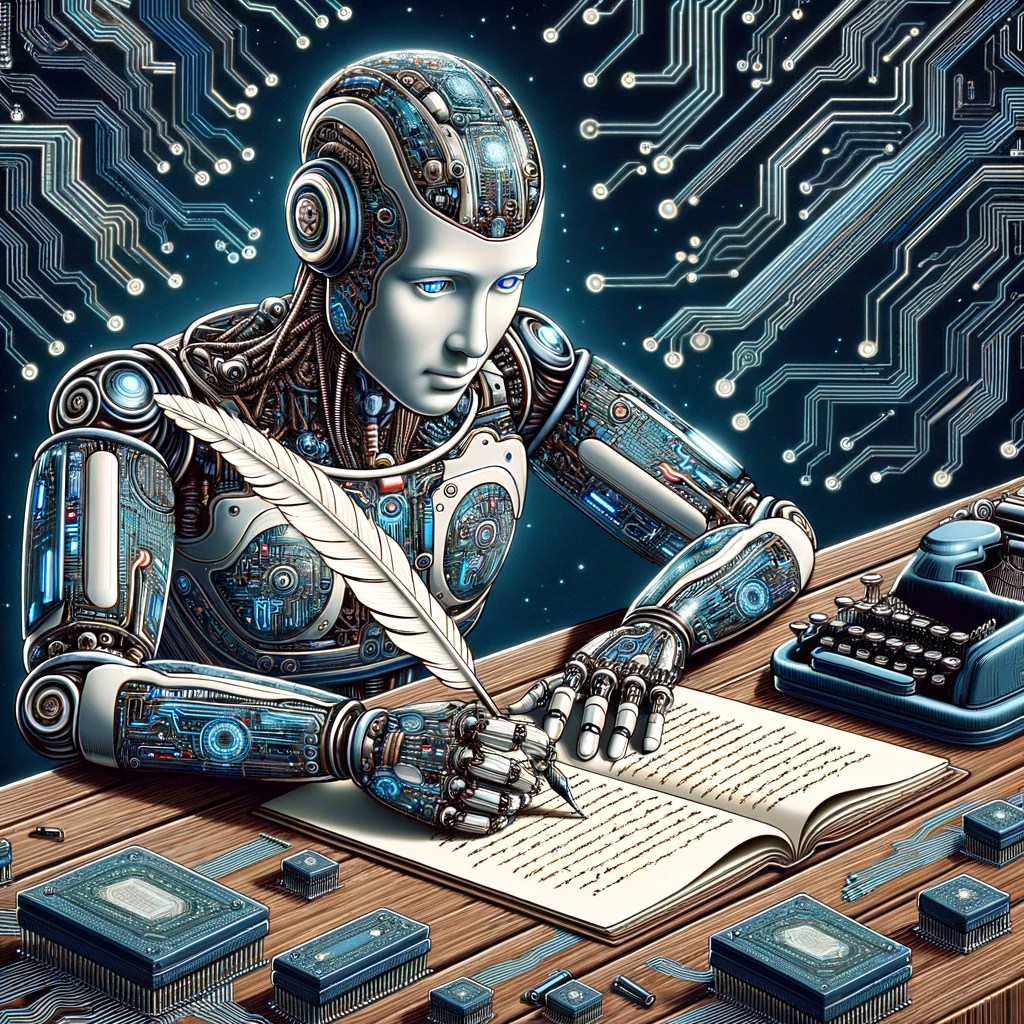
In the age of technological advancement, artificial intelligence (AI) has made remarkable strides in numerous fields, from healthcare to finance. AI has shown potential is in content generation, even venturing into the sacred realm of literature. But can an algorithm ever truly replace the human author? In my book, the answer is a resounding ‘no’.
The Wellspring of Human Emotion
At the heart of every novel is emotion. Authors draw from a reservoir of personal experiences, from heartbreaks to moments of elation. These emotional depths, the rawness of being human, are incredibly complex to capture genuinely. While AI can imitate patterns of emotional storytelling, the genuine understanding and experience of these emotions remain uniquely human.
The Individual’s Unique Lens
Every author brings to the table their own unique life journey, cultural background, and personal struggles. This individuality translates into a distinct voice and perspective in their writing, something an AI, devoid of life experiences, cannot replicate.
The Moral Compass
Many novels grapple with intricate ethical, philosophical, and moral dilemmas, born from centuries of human introspection and cultural evolution. An AI, devoid of conscience or moral grounding, can’t engage in these explorations with the same authenticity.
Intent Matters
Behind every novel is an author’s intent. It might be to challenge societal norms, share a personal journey, or provide escapism. AI lacks this intent; it generates content based on algorithms without a deeper ‘why’ driving it.
The Human Connection
Readers often form deep connections with authors, sensing the person behind the words. Knowing that a story emerged from someone’s dreams, fears, and hopes adds a layer of connection that AI-generated content lacks.
The Evolution of Culture and Language
Authors don’t just reflect culture and language; they shape it. The introduction of new ideas, the challenging of norms, and linguistic creativity are inherently human endeavors. While AI can mimic and adapt to current patterns, it doesn’t drive genuine cultural and linguistic evolution.
The Boundaries of Algorithms
Despite its capabilities, AI remains bound by algorithms and data patterns. The disruptive innovation and convention-breaking seen in many iconic novels come from an author’s imagination, not a predefined algorithm.
Growth Through Feedback
Authors evolve through feedback, learning, and personal growth. While AI can adjust its outputs based on data, it doesn’t possess the introspective quality inherent to human evolution.
The Authenticity of Research
Many authors immerse themselves in extensive research, from lived experiences to in-depth interviews. This depth adds layers of authenticity to their stories, beyond what data-driven AI can achieve.
The Ineffable Human Touch
Lastly, there’s an intangible quality to human-written novels, something that resonates with our very soul. It’s the warmth of knowing that a story has been handcrafted with passion, dedication, and love.
Hence
While AI holds promise as a tool to aid authors, from editing to brainstorming, the essence of storytelling remains profoundly human. Novels, with their tapestry of emotions, insights, and creativity, will continue to be the domain where the human spirit shines brightest.

 vi verbi
Lämna en kommentar